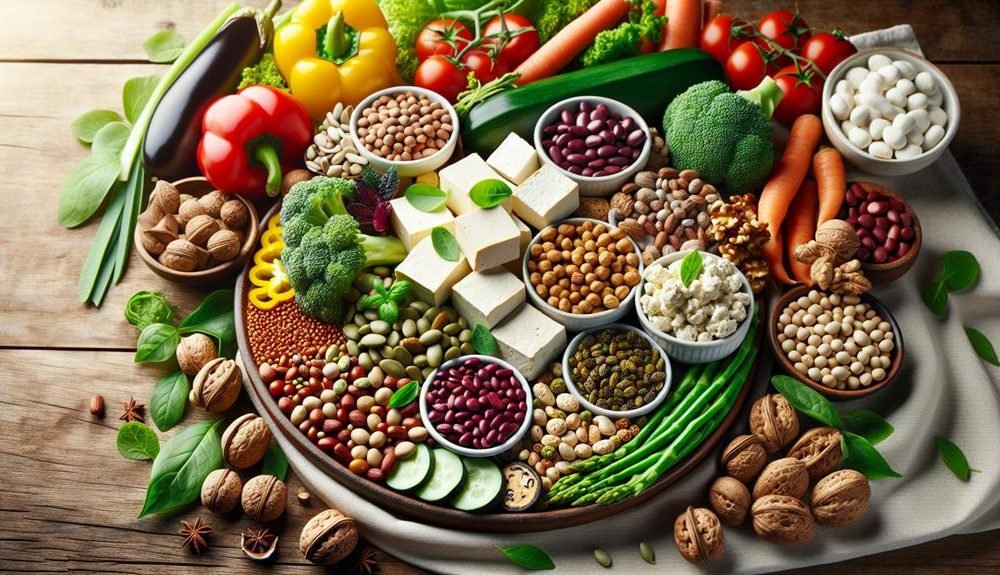
Opt for vegetarian proteins on a keto diet for their low carbs and muscle support. Plant-based options like tofu and tempeh offer quality protein. These proteins help in weight loss and enhance fiber intake. Amino acids from vegetarian sources are essential for body function, but some may lack a complete profile. Combining plant proteins is key for ultimate health. Tofu, tempeh, and seitan are excellent low-carb choices. Including various nuts, seeds, and legumes diversifies nutrient intake. Vegetarian proteins align with keto goals by balancing macronutrients effectively. For a deeper understanding of vegetarian keto benefits, explore further.
Key Takeaways
- Vegetarian proteins are low in carbs, aiding in ketosis.
- Plant-based sources like tofu and tempeh offer complete proteins.
- Essential for muscle maintenance and weight loss on keto.
- Rich in fiber, promoting digestive health and satiety.
- Ethical and sustainable choice with diverse amino acid profiles.
Benefits of Vegetarian Proteins on Keto
Choosing vegetarian proteins on a Keto diet offers numerous benefits, including their low carb content and essential nutrient profile. Plant-based sources such as tofu and tempeh are excellent options for individuals following a Keto diet, as they are low in carbohydrates while providing a good amount of protein. These vegetarian proteins can be valuable additions to your meals, supporting your health goals while keeping you in a state of ketosis.
Including vegetarian proteins in your diet can have various health benefits. Not only do they help you maintain muscle mass, but they can also aid in achieving your weight loss objectives. By opting for plant-based proteins, you can steer clear of the saturated fats often present in animal proteins, promoting a heart-healthy eating pattern. Furthermore, these proteins can enhance your fiber intake, which is essential for digestion and can contribute to a feeling of fullness, preventing overeating.
Nuts and seeds are another category of plant-based proteins that offer a wide array of essential nutrients. They contain vitamins, minerals, and antioxidants that are beneficial for overall health. By incorporating these into your Keto diet, you can make sure you are meeting your nutritional requirements while enjoying the benefits of a low-carb, plant-focused eating plan.
Importance of Amino Acids
Amino acids serve as the fundamental building blocks of proteins, playing an essential role in muscle growth and repair within the body. Among the 20 amino acids, there are 9 that are considered critical because the body cannot produce them independently, making it important to obtain them through dietary sources. When focusing on plant-based proteins, it's important to note that certain plant sources may lack specific essential amino acids. To guarantee a complete amino acid profile, incorporating a variety of plant-based protein sources into your meals can help address this deficiency.
Creating complete proteins becomes especially significant when following a vegetarian or vegan diet, as these diets primarily rely on plant-based protein sources. By combining different plant proteins like grains, legumes, nuts, and seeds, you can create meals that provide all the essential amino acids necessary for optimal body function and muscle growth. Adequate intake of essential amino acids is crucial for supporting overall health, as these nutrients play a crucial role in various physiological processes within the body. Hence, being mindful of your protein sources and their amino acid composition is key to maintaining a well-rounded and nourishing diet.
Limiting Carb Intake
Limiting carb intake is a crucial aspect of a keto diet to initiate and sustain ketosis, where the body shifts to burning fat for energy rather than carbohydrates. When following a keto diet, it's essential to be mindful of your carb intake to stay within the recommended limits and support the metabolic state of ketosis. Vegetarian proteins play a key role in this by offering a variety of options that are typically lower in carbs compared to many animal-based proteins.
Plant-based proteins like tofu, tempeh, and seitan are excellent choices for reducing carb intake while still meeting your protein needs. By incorporating these vegetarian protein sources into your meals, you can effectively control your carb intake while ensuring you receive essential nutrients and amino acids necessary for overall health and well-being. Choosing vegetarian proteins on a keto diet not only helps you manage your carb consumption but also allows for a diverse and satisfying range of food options that contribute to your overall dietary satisfaction and success on the ketogenic journey. Make informed choices about the vegetarian proteins you consume to strike a balance between meeting your nutritional requirements and staying within your carb limits for best results.
Vegetarian Protein Sources for Keto
For a keto diet, incorporating vegetarian protein sources like tofu, tempeh, and seitan is essential for maintaining ketosis due to their low carb content. These plant-based proteins offer a valuable alternative for individuals seeking to limit carb intake while ensuring adequate protein consumption. Tofu, tempeh, and seitan are particularly advantageous as they provide complete proteins containing all essential amino acids required by the body.
In addition to these options, plant-based protein powders can also be included in a keto diet to boost protein intake without markedly increasing carb levels. Nuts, seeds, and legumes are other plant-based protein sources that can be integrated into meals to add variety and enhance nutritional balance. By diversifying your vegetarian protein sources, you not only meet your protein needs but also benefit from a spectrum of essential nutrients.
Maintaining a state of ketosis requires careful consideration of food choices, making vegetarian protein sources a strategic component of a keto diet. Ensuring that these protein sources are low in carbs while providing essential amino acids is key to achieving your dietary goals. Embrace the variety offered by plant-based proteins to create flavorful, satisfying meals that support both your nutritional needs and your commitment to a keto lifestyle.
Healthy Fats for Vegetarians
To maintain a well-rounded vegetarian keto diet, incorporating healthy fats like olive oil, coconut oil, and avocado oil is essential for providing essential nutrients and supporting overall well-being. Plant-based fats play an important role in a vegetarian's diet, offering a rich source of monounsaturated and polyunsaturated fats that are heart-healthy and important for various bodily functions. These fats not only contribute to satiety but also support brain health and provide sustained energy levels throughout the day.
Including plant-based fats in your meals can be as simple as drizzling olive oil over salads, using coconut oil for cooking, or adding avocado oil to smoothies. These healthy fats are versatile and can enhance the flavor profiles of your dishes while boosting your nutrient intake. By opting for healthy fats as a vegetarian on a keto diet, you guarantee a balanced macronutrient profile that supports ketosis effectively.
Next time you prepare a meal, consider incorporating these heart-healthy plant-based fats to not only elevate the taste but also to nourish your body with essential nutrients. Making these small changes in your diet can have a significant impact on your overall well-being, providing you with the energy and nutrients needed to thrive on a vegetarian keto diet.
Considering Soy on Keto
Consider incorporating soy into your vegetarian keto diet to benefit from its complete protein profile and potential health advantages. Soy is a versatile plant-based protein source that contains all essential amino acids necessary for your body's functions. Tofu, tempeh, and edamame are popular soy products that can enhance your protein intake while offering additional benefits like fiber and healthy fats, all while being low in carbohydrates, making them suitable for a keto diet.
Tofu, for example, can be used in various dishes such as stir-fries, salads, and smoothies, providing a substantial protein boost without compromising your low-carb goals. Additionally, soy products like tofu are rich in phytoestrogens, plant compounds that mimic estrogen in the body. While the effects of phytoestrogens are still being studied, they may offer potential health benefits such as reducing menopausal symptoms and improving heart health.
Tips for Vegan Keto Diet
When adhering to a vegan keto diet, make sure your protein intake is met by including a variety of plant-based sources rich in essential amino acids. Plant-based proteins like tofu, tempeh, and seitan offer essential amino acids necessary for muscle function. To meet your daily protein requirements, focus on incorporating protein-rich vegetables such as spinach, kale, and broccoli into your meals. Nuts and seeds are also excellent nutrient-dense options for plant-based protein on a vegan keto diet, providing not only protein but also healthy fats and essential minerals.
For a well-rounded protein intake, consider including spirulina and nutritional yeast in your diet. These sources offer complete amino acids, iron, and B-vitamins, enhancing the nutritional profile of your meals. It's important to choose low-carb options when selecting plant-based proteins to maintain ketosis. While beans and quinoa are high in protein, they are also high in carbs, so opt for lower-carb alternatives to support your ketogenic goals effectively.
Best Vegetarian Keto Recipes
Exploring a variety of vegetarian keto recipes can provide innovative and delicious ways to incorporate plant-based proteins into your ketogenic diet. The best vegetarian keto recipes are not only low in carbs but also rich in protein, making them ideal for those following a keto diet while avoiding animal products. By choosing plant-based proteins such as tofu, tempeh, and seitan, you can enjoy diverse nutrient intake while supporting ketosis.
Incorporating protein-rich ingredients like nuts, seeds, and plant-based alternatives into your vegetarian keto recipes guarantees that you meet your protein needs without compromising your dietary choices. These recipes not only offer a wide range of flavors and textures but also align with ethical considerations, promoting sustainable and cruelty-free food choices.
From savory tofu stir-fries to hearty tempeh salads, the options for vegetarian keto recipes are endless. Whether you prefer a light and invigorating meal or a more substantial dish, there are plenty of creative ways to enjoy plant-based proteins on a ketogenic diet. Making these ethical choices not only benefits your health but also contributes to a more sustainable food system.
Keto Buffalo Deviled Eggs
For a protein-rich and flavorful snack or appetizer on a vegetarian keto diet, try making Keto Buffalo Deviled Eggs. These eggs are a low-carb, high-fat option that provides a satisfying treat. The combination of eggs, mayonnaise, and avocado oil offers a good dose of protein and healthy fats, making it a nutritious choice for those following a vegetarian keto lifestyle. The buffalo flavor infused into these deviled eggs adds a spicy twist, enhancing the taste without guaranteeing their keto-friendly nature.
Preparing Keto Buffalo Deviled Eggs is simple and convenient, making them an ideal option for a quick snack or party appetizer. By incorporating vegetarian-friendly ingredients, these deviled eggs cater to a wide range of dietary preferences while still delivering a burst of flavor. The balance of nutrients in this dish ensures that you get the protein you need while staying within the keto guidelines.
Whether you are looking for a high-protein snack or a tasty appetizer to share with friends, Keto Buffalo Deviled Eggs can satisfy your cravings while keeping you on track with your vegetarian keto diet. Enjoy the rich combination of eggs, mayonnaise, and avocado oil, complemented by the bold buffalo flavor, in every delicious bite.
Cream Puff Chaffles
To explore a delectable dessert option that aligns with your vegetarian keto lifestyle, consider indulging in Cream Puff Chaffles, a delightful combination of low-carb ingredients that offer a sweet and satisfying treat. These cream puff chaffles are a keto-friendly, high-fat dessert that merges the crispy texture of chaffles with the creamy, sweet essence of a traditional cream puff. Typically crafted from almond flour, cream cheese, eggs, and a keto-approved sweetener, these chaffles provide a satisfying option for those on a vegetarian keto diet looking to satiate their sweet cravings.
The beauty of cream puff chaffles lies in their versatility. You can customize them with an array of toppings to suit your preferences. Consider adding sugar-free whipped cream for an extra touch of decadence or fresh berries to enhance the fruity notes. The almond flour used in the chaffles not only keeps the carb count low but also adds a nutty flavor that complements the sweetness of the dessert. By opting for cream puff chaffles, you can indulge in a guilt-free, flavorful treat that aligns perfectly with your dietary choices. So go ahead, treat yourself to these delightful low-carb delights and satisfy your sweet tooth without straying from your keto path.
Keto Cinnamon Roll Muffins
Consider incorporating Keto Cinnamon Roll Muffins into your vegetarian keto diet for a delicious and satisfying low-carb treat. These muffins are specially crafted for individuals following a vegetarian keto lifestyle, offering a delightful alternative to traditional high-carb cinnamon rolls. Made with almond flour, coconut oil, and sugar-free sweeteners, these treats are not only flavorful but also keep you in ketosis by being low in carbs.
Almond flour serves as the base for these muffins, providing a nutty flavor and a moist texture while keeping the carb count low. Coconut oil adds a hint of tropical taste and healthy fats, making these muffins a nourishing option. The use of sugar-free sweeteners ensures that you can enjoy the sweetness of cinnamon rolls without compromising your ketosis goals.
Indulging in Keto Cinnamon Roll Muffins can help satisfy your cravings for a sweet breakfast or snack without derailing your vegetarian keto diet. By choosing these low-carb treats, you can stay on track with your nutritional objectives while still enjoying the flavors you love. So, next time you're seeking a tasty yet keto-friendly option, reach for these cinnamon roll muffins and relish every bite guilt-free.
Cucumber Boats
Incorporating cucumber boats into your vegetarian keto diet provides a hydrating and nutrient-packed snack or appetizer option. These low-carb delights are a invigorating choice that aligns perfectly with the principles of the vegetarian keto diet. Cucumber boats are simple to prepare; you can easily hollow out cucumber halves and fill them with a variety of ingredients to suit your palate.
Cucumbers are not only low in carbs but also boast high water content, making them an excellent hydrating choice. Additionally, they are rich in essential vitamins and minerals, further enhancing their nutritional value. When considering filling options for your cucumber boats, you have a wide array of choices. From creamy avocado to savory cream cheese or protein-packed tuna salad, there are filling options to keep you satisfied and energized throughout the day.
The versatility of cucumber boats allows for endless flavor combinations, ensuring that you never get bored with your vegetarian keto snacks. Whether you prefer a more savory or creamy option, cucumber boats can be tailored to your taste preferences. So, next time you're looking for a quick, filling, and nutritious snack on your vegetarian keto journey, consider turning to these invigorating cucumber boats for a delightful treat.
Vegetarian Keto Moderation
Achieving moderation in your vegetarian keto diet is essential for optimizing protein, fat, and carb intake to support your overall health and wellness goals. When following a vegetarian keto diet, it's vital to focus on consuming high-quality proteins to meet your nutritional needs. Sources like tofu, tempeh, and seitan are excellent choices as they provide essential amino acids necessary for muscle building and overall health on a keto diet.
To maintain a balanced intake, it's important to pair these proteins with healthy fats and low-carb vegetables. This approach guarantees that your vegetarian keto meal plan is well-rounded and meets your dietary requirements. Additionally, incorporating a variety of vegetarian protein sources into your diet can help prevent nutrient deficiencies and support your overall health goals while on a keto diet.
Additional Keto Tips and Inspiration
To optimize your vegetarian keto diet further, explore additional tips and inspirations that can enhance your meal planning and overall adherence to ketosis. When incorporating plant-based proteins into your meals, it's crucial to explore the variety available to make sure you're getting a wide range of amino acid profiles. By diversifying your protein sources with options like tofu, tempeh, seitan, and legumes, you can enhance the nutritional quality of your diet. These plant-based proteins not only provide essential nutrients but also contribute to sustainability by reducing the environmental impact associated with animal agriculture.
In addition to focusing on protein, remember to pay attention to micronutrients. Vegetarian keto diets can sometimes fall short in certain vitamins and minerals, so be sure to include a variety of vegetables, nuts, and seeds to meet your micronutrient needs. Experiment with different herbs, spices, and low-carb sauces to add flavor to your meals without compromising your ketosis. Embracing the culinary diversity that plant-based proteins offer can make your keto journey more enjoyable and sustainable in the long run.
Reader Interactions
Engage with readers to foster a dynamic exchange of ideas and experiences within the context of vegetarian proteins on a keto diet. When considering plant-based proteins for your ketogenic journey, it's essential to understand their benefits beyond being low in carbs. These protein sources, such as tofu and tempeh, not only help reduce saturated fat intake commonly found in animal products but also offer a plethora of essential nutrients like fiber, vitamins, and minerals vital for your overall health.
By choosing vegetarian proteins, you not only support your health but also make sustainable and ethical food choices. The environmental impact of plant-based proteins is significantly lower than that of animal-based options, making them a more eco-conscious decision. Additionally, incorporating a variety of vegetarian proteins into your diet ensures you receive a well-rounded intake of amino acids necessary for top-notch muscle function and overall wellness.
In this space for reader interactions, feel free to share your experiences, recipes, and tips on incorporating plant-based proteins into your keto lifestyle. Whether you have questions about specific protein sources or want to discuss the benefits of ethical food choices, this platform is open for a diverse range of discussions. Let's build a community centered around the intersection of vegetarian proteins, keto diets, and sustainable living.
Frequently Asked Questions
What Is the Best Protein for Keto Diet?
For a keto diet, the top protein options are lean animal proteins like chicken, turkey, and fish. These selections offer essential amino acids for muscle building, aiding in weight loss. Their low carb content supports ketosis, promoting satiety and assisting in meal planning. Including these proteins into your diet guarantees nutritional benefits while optimizing your keto journey.
Is Plant Protein Powder OK on Keto Diet?
Plant protein powders are suitable for a keto diet as they are low in carbs and rich in essential amino acids, making them a great choice for vegetarians. They help you meet protein needs while staying in ketosis. Opt for unsweetened versions to keep carb intake low. Easily digestible and versatile, they can be used in smoothies or baked goods. Incorporating plant protein powders adds variety and supports muscle maintenance in a vegetarian keto lifestyle.
How Healthy Is Vegetarian Keto?
On a vegetarian keto diet, you can achieve nutritional balance, reap health benefits, manage weight effectively, sustain energy levels, promote digestive health, support muscle building, and address sustainability concerns. This dietary approach combines the benefits of plant-based proteins with the metabolic advantages of a keto diet, offering a holistic approach to health and wellness. By incorporating vegetarian proteins, you can optimize your overall well-being while aligning with sustainable eating practices.
What Are the Principles of Vegetarian Keto Diet?
When following a vegetarian keto diet, you focus on high fat, moderate protein, and very low carb intake to reach ketosis. Protein sources like tofu and tempeh take center stage in your meal planning. Achieving nutritional balance through healthy fats like olive oil is key. Embrace cooking techniques that enhance flavors without adding carbs. Enjoy the health benefits, weight management perks, and address sustainability concerns through your dietary choices.
Conclusion
To sum up, choosing vegetarian proteins on a keto diet provides numerous benefits such as essential amino acids and low carb intake. Remember to incorporate a variety of protein sources like tofu, tempeh, and seitan to meet your nutritional needs. While it may seem ironic to limit carbs while still enjoying a plant-based diet, vegetarians can successfully follow a keto lifestyle with proper planning and moderation. Keep experimenting with new recipes and stay on track with your keto goals.